
Flexible Sigmoidoscopy prep, made simple and calm.
A clear, step-by-step guide that walks you through every stage of flexible sigmoidoscopy preparation — from diet changes to reminders, so nothing is left to guesswork.
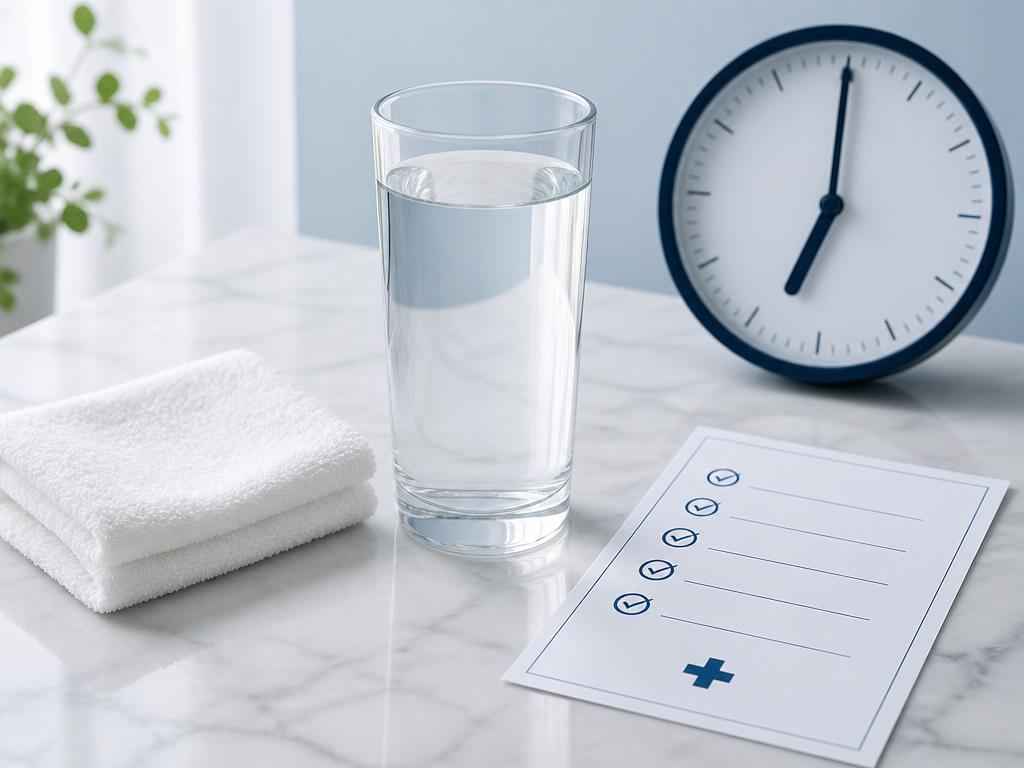
Prep checklist
A day-by-day checklist from 7 days before through the morning of your procedure.
Diet guide
Fasting, medication and arrival guidance for the day of your procedure.
Reminders & tracking
Set gentle reminders for meals, hydration, and fasting so you stay on track.
Procedure info
Know exactly what happens before, during, and after your flexible sigmoidoscopy.
Diet guide
How to prepare on the day of your procedure, so everything is safe and simple.
Prep reminders
Stay on track without the stress
Add prep to your calendar
All seven days of reminders, timed to your appointment
Choose your procedure date to generate the full prep schedule — including the 7-day review and fasting timings.
Never miss a step
Set gentle reminders for each part of your prep — from meals to hydration windows to your final dose. Tracking keeps you confident and calm.
- Email or text check-ins timed to your appointment
- Reminders 7 days before and the morning of your procedure
- Links to the right diet guide at each stage
Procedure info
Knowing what the procedure involves and how to prepare helps ease anxiety and makes the day feel more manageable.
What is a flexible sigmoidoscopy?
Flexible sigmoidoscopy uses a flexible tube with a ‘video camera’ at the tip, which is inserted into the back passage to examine the lower third of the large bowel (colon).
Why have a flexible sigmoidoscopy?
A flexible sigmoidoscopy allows the Gastroenterologist to examine the lining of the bowel closely, and can detect inflammation of the mucosa, polyps or early signs of cancer. It can be used to diagnose patients with bleeding from the anus, unexplained change in bowel habit, abdominal pain and weight loss.
How to prepare for a flexible sigmoidoscopy?
You will need to fast for 6 hours prior to the procedure if you are having an anaesthetic or sedative. When fasting have nothing to eat or drink for 6 hours, other than clear water only up to 3 hours before your procedure. Some patients opt not to have any sedatives so they can drive home, however be aware that the procedure is uncomfortable/painful. If you are not having any sedation, you do not need to fast. Please take your regular medications with a sip of water at least 2 hours prior to attending hospital. However if you are on a blood thinning medication such as clopidogrel (Plavix) or warfarin, please discuss this with your GP or contact the Hospital prior to the procedure, as these medications may have to be stopped up to 1 week prior to the procedure. You should advise the nursing staff if you are allergic or sensitive to any drug or substances.
What do we do?
You will be given an enema (a solution that is inserted into the rectum to clean the lower bowel) when you arrive at the Gastroenterology Department, prior to the procedure. You will be given a sedative through a vein in the arm before the procedure to make you more comfortable. The endoscope is inserted through the back passage (rectum) into the large intestine to allow inspection of the large bowel.
Safety and risks?
Flexible sigmoidoscopy is usually simple and safe. Rare complications include bleeding and perforation of the bowel. Severe bleeding or perforation may require an operation. If polyps are found and removed (polypectomy), there is a higher risk of perforation or bleeding from the site where the polyp has been removed however these complications are uncommon. Complications from the sedation are rare. Patients with severe heart or chest disease are at higher risk, and special precautions are taken to avoid complications. This includes administering oxygen during the procedure and monitoring oxygen levels in the blood and your pulse rate and blood pressure. The sigmoidoscope is a reusable instrument, which cannot go through a heat sterilisation process. However, after each use it is thoroughly cleaned and then disinfected, using a high level disinfectant. The hospital cleans and disinfects the sigmoidoscope according to the standards set by the Gastroenterological Society of Australia. The possibility of infection being introduced during the procedure cannot be completely ruled out, but seems extremely rare. Death is a remote possibility with any interventional procedure. If you wish to have details of possible rare complications discussed before the procedure, you should inform your doctor.
Please read these instructions carefully and follow your prep instructions as detailed
Following these instructions carefully is the most important step for a safe and smooth procedure. Follow the prep instructions above as detailed unless your Doctor or the clinic advise otherwise.
Call our clinic if you have questions about medications, diet, or timing.
Coastal Gastroenterology · Wexford Medical Centre, Level 3, Suite 46, 3 Barry Marshall Parade, Murdoch WA 6150
Ready to feel prepared?
Start your personalised prep plan today and go into your appointment with confidence.
Build your prep plan